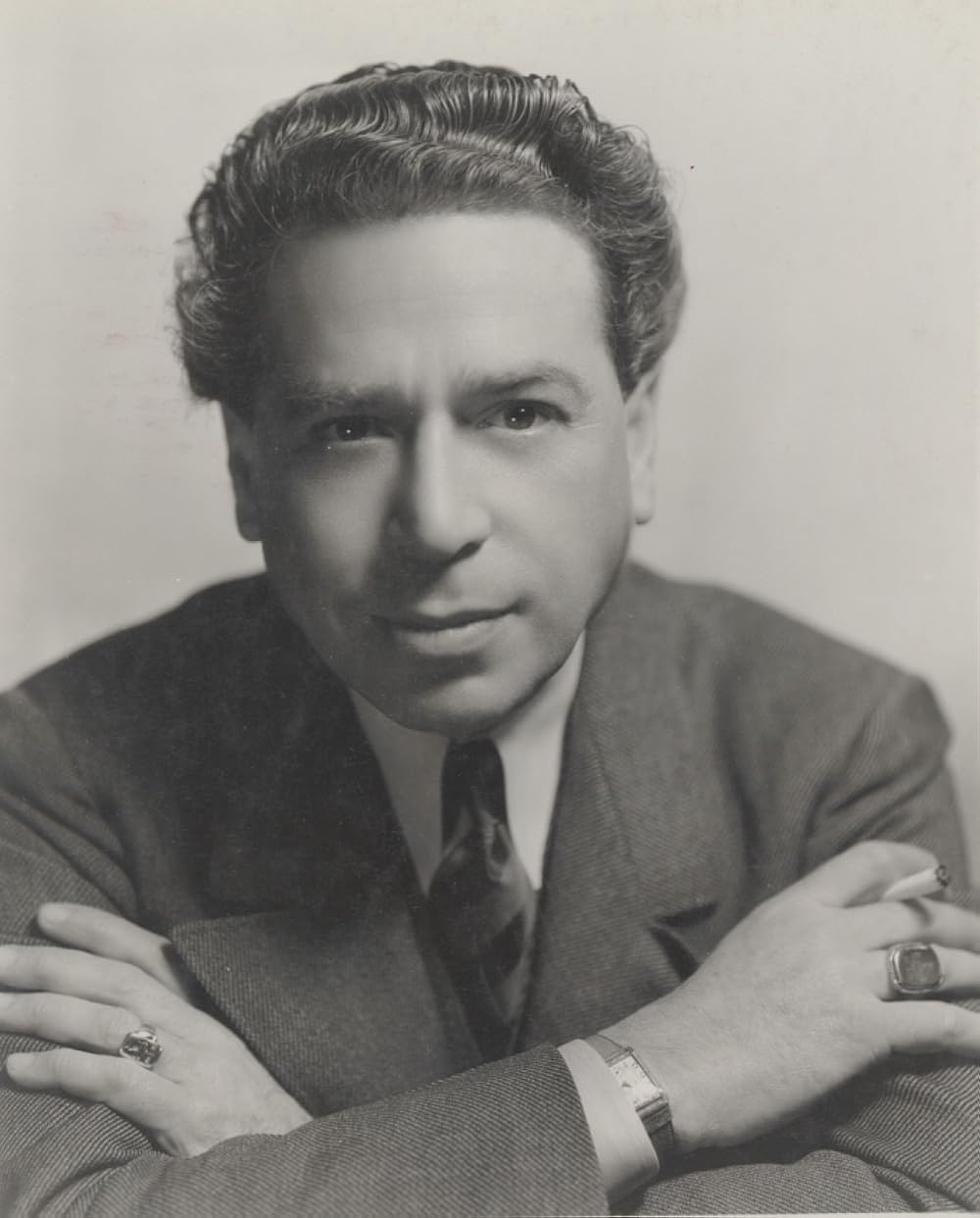
 Edgar Allan Woolf (April 25, 1881 – December 9, 1943) was an American lyricist, playwright, and screenwriter whose creative contributions spanned
Broadway stages and Hollywood’s Golden Age.
Edgar Allan Woolf (April 25, 1881 – December 9, 1943) was an American lyricist, playwright, and screenwriter whose creative contributions spanned
Broadway stages and Hollywood’s Golden Age.Queer Places:
Columbia University (Ivy League), 116th St and Broadway, New York, NY 10027
911 N Beverly Dr, Beverly Hills, CA 90210, USA
Beth Olom Cemetery, 2 Cypress Hills St, Brooklyn, NY 11208, United States
Edgar Allan Woolf (April 25, 1881 – December 9, 1943) was an American lyricist, playwright, and screenwriter whose creative contributions spanned
Broadway stages and Hollywood’s Golden Age.
Born in New York City on April 25, 1881, to Albert E. Woolf, a manufacturer and inventor, and Rosamond Wimpfheimer Woolf, he was raised alongside his sibling, Samuel Johnson Woolf. Higher education brought him to City College of New York and Columbia University, where he earned a Bachelor of Arts degree in 1901. His penchant for theatrical writing emerged during his senior year at Columbia, where he authored the institution's annual Varsity Show, The Mischief Maker.
Following his graduation, Woolf embarked on a career in the performing arts by joining the Murray Hill Stock Company as an actor. Though he performed on New York stages for several years, his primary focus quickly shifted toward writing. He became a prolific author of sketches and plays for vaudeville stars such as Pat Rooney and Mrs. Patrick Campbell. During this period, he penned notable works including the play Wings of Smoke and collaborated with composer Jerome Kern on the comic opera Head Over Heels, starring Mitzi Hajos.
Woolf wrote the book for the 1906 musical revue Mam'zelle Champagne, which became infamous due to an event on its opening night at the outdoor Madison Square Garden Roof Theatre, where millionaire Harry K. Thaw shot and killed renowned architect Stanford White. The surrounding media coverage allowed the otherwise modest production to run for approximately sixty performances. Woolf continued his Broadway career by writing the book for the 1918 musical Toot-Toot!, featuring music by Jerome Kern and lyrics by Berton Braley, to which Woolf contributed the lyrics for the song "You're So Cute, Soldier Boy." He later authored the book for Sigmund Romberg’s 1921 musical Love Birds.
In the early 1930s, Woolf relocated to Los Angeles, joining Metro-Goldwyn-Mayer as a screenwriter. At MGM, he contributed to notable feature films, including the horror classics Freaks and The Mask of Fu Manchu in 1932. He frequently collaborated with fellow screenwriter Florence Ryerson, forming a partnership that produced scripts for more than ten films, such as The Ice Follies of 1939. The pair’s most famous assignment came when they were brought in to revise Noel Langley’s script for the cinematic adaptation of L. Frank Baum’s The Wizard of Oz (1939). Woolf and Ryerson introduced several enduring story elements, including the character of Professor Marvel as the Kansas counterpart to the Wizard, as well as the scene featuring the enchanted, talking apple trees.
Beyond his professional output, Woolf was notable for living openly as a gay man in mid-century Hollywood, an era when many industry figures remained deeply closeted. MGM story editor Samuel Marx famously described him as a "wild, red-headed homosexual." Woolf integrated into the prominent Hollywood LGBTQ scene of the period, which included figures like playwright John Colton, author of Rain, who shared a residence with Mercedes de Acosta and frequented social outings with director George Cukor and costume designer Orry-Kelly. Within this network, Colton famously performed drag acts imitating figures like Sarah Bernhardt at private gatherings. Woolf anchored his own social circle through his love of cooking, regularly hosting lavish Saturday night dinner parties and Sunday brunches at his home, entertaining high-profile studio executives, directors, and writers, including MGM studio head Louis B. Mayer.
Woolf remained single throughout his life, residing in Beverly Hills at 911 North Beverly Drive with three servants and his blind companion dog. On December 9, 1943, at the age of 62, Woolf suffered a fatal accident at his residence when he tripped over his dog's leash at the top of a stairwell leading to the kitchen. His servants discovered him at the bottom of the steps, and he was transported to St. John's Hospital in Santa Monica, where he died two hours later from a basal skull fracture. Following his death, his body was returned to New York, where he was interred on December 11, 1943, at Beth Olom Cemetery in Queens.
References:
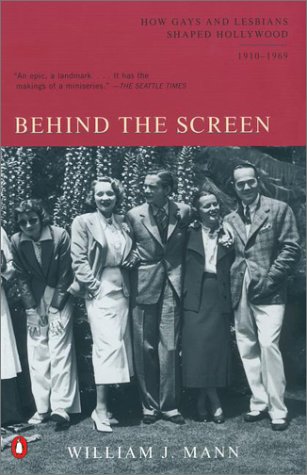 Behind the Screen: How Gays and Lesbians Shaped Hollywood, 1910-1969 Paperback – October 29, 2002 by William J. Mann |
Other references:
Support this project
This website is a passion project researched, developed, and funded entirely by me. If you find the content valuable and would like to help support the ongoing research and hosting costs, any contribution is deeply appreciated.
Thank you for keeping this independent resource alive!
My books on Amazon: Elisa Rolle's books